 scale(1 -1)' gradientUnits='userSpaceOnUse'%3e%3cstop offset='0' stop-color='%23d257fc' /%3e%3cstop offset='.15' stop-color='%23b62dcc' /%3e%3cstop offset='.32' stop-color='%23909' /%3e%3cstop offset='.44' stop-color='%238312b6' /%3e%3cstop offset='.76' stop-color='%23503eff' /%3e%3c/linearGradient%3e%3c/defs%3e%3cg%3e%3cg%3e%3cpath fill='%23fff' d='M288.22,77.61c2.7-1.09,5.19-2.4,7.44-3.91,3.22-2.16,5.96-4.72,8.15-7.59,2.2-2.88,3.9-6.12,5.07-9.65,1.16-3.52,1.75-7.29,1.75-11.23,0-4.95-.86-9.56-2.57-13.71-1.73-4.21-4.49-7.87-8.18-10.88-3.65-2.97-8.36-5.31-14-6.94-5.57-1.61-12.32-2.43-20.06-2.43h-35.88V126.51h24.51v-43.55h6.98c2.15,0,3.24,.34,3.77,.62,.77,.41,1.51,1.16,2.21,2.23l23.43,35.68c1.03,1.58,2.33,2.83,3.84,3.69,1.54,.88,3.4,1.33,5.52,1.33h22.21l-29.9-44.11c-1.27-1.85-2.7-3.45-4.28-4.78Zm-33.77-46.52h11.37c7.17,0,12.52,1.39,15.88,4.12,3.29,2.68,4.89,6.46,4.89,11.56,0,2.58-.42,4.97-1.26,7.1-.81,2.08-2.07,3.91-3.72,5.42-1.67,1.53-3.86,2.76-6.49,3.65-2.69,.91-5.93,1.37-9.61,1.37h-11.06V31.09Z' /%3e%3cpath fill='%23fff' d='M386.19,53.94c-3.56-3.67-7.92-6.54-12.95-8.53-5.01-1.98-10.65-2.98-16.76-2.98s-11.77,1-16.8,2.98c-5.06,1.99-9.44,4.86-13.03,8.53-3.59,3.67-6.4,8.19-8.36,13.45-1.95,5.22-2.93,11.12-2.93,17.54s.99,12.39,2.93,17.61c1.96,5.26,4.77,9.81,8.35,13.52,3.59,3.73,7.98,6.63,13.04,8.62,5.03,1.98,10.68,2.98,16.8,2.98s11.76-1,16.76-2.98c5.04-1.99,9.4-4.89,12.96-8.62,3.56-3.72,6.34-8.27,8.27-13.53,1.92-5.22,2.89-11.14,2.89-17.61s-.97-12.31-2.89-17.53c-1.93-5.26-4.72-9.79-8.28-13.46Zm-16.65,49.47c-2.81,3.93-7.08,5.84-13.07,5.84s-10.43-1.92-13.27-5.88c-2.94-4.1-4.43-10.25-4.43-18.29s1.49-14.22,4.43-18.37c2.84-4,7.17-5.95,13.26-5.95s10.26,1.93,13.07,5.91c2.91,4.12,4.39,10.32,4.39,18.41s-1.48,14.25-4.39,18.33Z' /%3e%3cpath fill='%23fff' d='M462.91,102.23c-1.61,0-3.07,.51-4.36,1.52-.94,.74-2.04,1.54-3.27,2.41-1.16,.81-2.62,1.57-4.36,2.26-1.64,.65-3.89,.98-6.66,.98s-5.21-.52-7.36-1.55c-2.13-1.02-3.97-2.54-5.48-4.52-1.54-2.03-2.75-4.6-3.58-7.64-.85-3.11-1.28-6.73-1.28-10.75s.39-7.4,1.17-10.44c.76-2.96,1.91-5.5,3.43-7.56,1.47-2,3.35-3.55,5.58-4.62,2.25-1.08,4.93-1.63,7.97-1.63,2.4,0,4.42,.27,5.99,.79,1.64,.55,3.07,1.17,4.24,1.85,1.26,.73,2.35,1.39,3.25,1.96,1.23,.78,2.53,1.18,3.87,1.18,1.45,0,2.62-.34,3.49-1,.67-.51,1.33-1.18,2-2.03l6-8.3-1.14-1.14c-3.7-3.7-7.93-6.58-12.58-8.57-4.66-1.99-10.14-3-16.27-3-6.44,0-12.25,1.09-17.24,3.24-5.01,2.15-9.28,5.18-12.69,8.99-3.39,3.8-6,8.35-7.74,13.53-1.73,5.13-2.6,10.76-2.6,16.75,0,6.67,.99,12.71,2.93,17.96,1.95,5.27,4.65,9.8,8.01,13.45,3.38,3.68,7.4,6.52,11.95,8.44,4.53,1.91,9.42,2.88,14.53,2.88,2.85,0,5.77-.21,8.67-.64,2.95-.43,5.85-1.18,8.6-2.22,2.77-1.05,5.48-2.47,8.06-4.21,2.59-1.75,5.03-3.96,7.24-6.54l1.01-1.18-6.38-8.09c-1.12-1.67-2.85-2.55-5-2.55Z' /%3e%3cpath fill='%23fff' d='M529.12,81.74c-.39-.49-.81-.96-1.26-1.4,.43-.35,.85-.73,1.25-1.12,.97-.94,1.92-1.99,2.83-3.11l27.18-32.46h-21.46c-1.93,0-3.56,.39-4.83,1.16-1.15,.69-2.23,1.64-3.26,2.85l-19.63,24.25c-.81,.97-1.38,1.37-1.71,1.53-.25,.13-.87,.34-2.16,.34h-1.66V8.2h-22.81V126.51h22.81v-36.23h2.43c1.65,0,2.38,.23,2.67,.36,.25,.12,.78,.48,1.55,1.65l20.11,29.98c1,1.51,2.18,2.6,3.5,3.26,1.29,.64,2.84,.97,4.62,.97h20.77l-28.4-41.35c-.84-1.21-1.69-2.35-2.54-3.41Z' /%3e%3cpath fill='%23fff' d='M625.48,88.87c.94-.38,1.69-1.03,2.24-1.91,.48-.77,.79-1.75,.96-2.98,.14-1.04,.21-2.33,.21-3.84,0-5.91-.9-11.26-2.67-15.89-1.78-4.67-4.31-8.68-7.51-11.91-3.21-3.24-7.08-5.73-11.5-7.41-4.39-1.67-9.24-2.51-14.43-2.51-6.14,0-11.75,1.09-16.67,3.24-4.92,2.15-9.15,5.11-12.57,8.81-3.42,3.69-6.08,8.07-7.9,13.04-1.82,4.94-2.74,10.28-2.74,15.87,0,7.14,1.05,13.52,3.13,18.98,2.09,5.49,5,10.17,8.66,13.91,3.67,3.75,8.04,6.62,13,8.53,4.92,1.9,10.31,2.86,16.02,2.86,2.85,0,5.83-.21,8.85-.63,3.07-.43,6.12-1.17,9.07-2.21,2.98-1.05,5.87-2.46,8.6-4.2,2.76-1.76,5.29-3.97,7.51-6.57l1.01-1.19-6.47-8.09c-.58-.79-1.28-1.41-2.09-1.85-.84-.46-1.82-.69-2.91-.69-1.51,0-3.05,.45-4.6,1.33-1.23,.7-2.68,1.49-4.33,2.35-1.57,.82-3.44,1.58-5.56,2.27-2.03,.66-4.52,.99-7.4,.99-5.8,0-10.31-1.68-13.77-5.15-3.14-3.14-5.1-8.07-5.82-14.66h46.8c1.13,0,2.07-.16,2.87-.49Zm-49.09-14.77c.94-4.29,2.65-7.68,5.08-10.11,2.79-2.79,6.62-4.15,11.69-4.15,2.54,0,4.77,.42,6.62,1.26,1.84,.83,3.38,1.97,4.58,3.39,1.21,1.44,2.13,3.15,2.72,5.08,.44,1.43,.72,2.95,.85,4.54h-31.54Z' /%3e%3cpath fill='%23fff' d='M681.7,108.6l-.08-.12c-.52-.71-1.01-1.25-1.52-1.65-1.27-.99-3.22-1.16-4.92-.12-.43,.26-.92,.54-1.47,.82-.51,.27-1.13,.53-1.84,.78-.59,.21-1.37,.31-2.34,.31-1.53,0-2.65-.46-3.52-1.45-.91-1.03-1.37-2.55-1.37-4.53V61.69h20.81v-17.34h-20.81V19.45h-11.75c-1.55,0-2.88,.41-3.95,1.23-1.12,.85-1.84,2.04-2.14,3.55l-3.77,20.28-12.99,2.13v9.16c0,1.89,.59,3.37,1.75,4.41,1.1,.98,2.41,1.48,3.92,1.48h6.13v42.28c0,7.3,2.04,13.15,6.07,17.37,4.05,4.25,9.83,6.4,17.17,6.4,4.04,0,8-.63,11.77-1.87,3.81-1.25,7.23-3.13,10.18-5.58l1.26-1.05-6.56-10.64Z' /%3e%3c/g%3e%3cg%3e%3cpath fill='%23fff' d='M255.78,168.38c-.2,.4-.51,.6-.94,.6-.31,0-.72-.18-1.21-.53-.5-.35-1.15-.75-1.96-1.19-.81-.44-1.8-.84-2.98-1.19-1.18-.35-2.62-.53-4.32-.53-1.53,0-2.93,.22-4.19,.66-1.26,.44-2.34,1.03-3.24,1.76-.89,.74-1.59,1.59-2.09,2.57-.5,.98-.75,2-.75,3.08,0,1.33,.34,2.43,1.02,3.31,.68,.88,1.57,1.63,2.68,2.25,1.11,.62,2.36,1.16,3.77,1.61,1.4,.45,2.85,.91,4.32,1.36,1.48,.45,2.92,.96,4.32,1.51,1.4,.55,2.66,1.24,3.77,2.07,1.11,.82,2,1.83,2.68,3.02,.68,1.19,1.02,2.64,1.02,4.34,0,1.85-.33,3.56-1,5.15-.67,1.59-1.63,2.97-2.9,4.13-1.26,1.16-2.82,2.09-4.66,2.77-1.85,.68-3.95,1.02-6.3,1.02-2.98,0-5.55-.48-7.71-1.43-2.16-.95-4.09-2.19-5.79-3.73l.98-1.45c.14-.23,.3-.4,.47-.51,.17-.11,.41-.17,.72-.17,.37,0,.82,.23,1.36,.68s1.24,.94,2.11,1.47c.87,.53,1.94,1.02,3.24,1.47s2.89,.68,4.79,.68c1.79,0,3.36-.25,4.73-.75,1.36-.5,2.5-1.17,3.41-2.02s1.6-1.85,2.07-3,.7-2.36,.7-3.64c0-1.42-.34-2.6-1.02-3.53-.68-.94-1.58-1.73-2.68-2.38-1.11-.65-2.36-1.21-3.77-1.66-1.41-.45-2.85-.91-4.34-1.36s-2.94-.95-4.34-1.49c-1.4-.54-2.66-1.22-3.77-2.04-1.11-.82-2-1.82-2.68-3-.68-1.18-1.02-2.65-1.02-4.41,0-1.5,.33-2.95,.98-4.34,.65-1.39,1.58-2.61,2.79-3.66,1.21-1.05,2.68-1.89,4.41-2.51,1.73-.62,3.68-.94,5.83-.94,2.58,0,4.88,.37,6.88,1.12,2,.75,3.84,1.89,5.51,3.43l-.89,1.41Z' /%3e%3cpath fill='%23fff' d='M306.06,162.42c3.04,0,5.76,.52,8.15,1.55,2.4,1.04,4.42,2.51,6.07,4.41,1.65,1.9,2.9,4.19,3.77,6.88,.87,2.68,1.3,5.68,1.3,9.01s-.43,6.32-1.3,8.98c-.87,2.67-2.12,4.95-3.77,6.86-1.65,1.9-3.67,3.36-6.07,4.39-2.4,1.02-5.12,1.53-8.15,1.53s-5.76-.51-8.15-1.53c-2.4-1.02-4.43-2.48-6.09-4.39-1.66-1.9-2.92-4.19-3.79-6.86-.87-2.67-1.3-5.66-1.3-8.98s.43-6.32,1.3-9.01c.87-2.68,2.13-4.97,3.79-6.88,1.66-1.9,3.69-3.37,6.09-4.41,2.4-1.04,5.12-1.55,8.15-1.55Zm0,40.41c2.53,0,4.73-.43,6.62-1.3,1.89-.87,3.46-2.11,4.73-3.73,1.26-1.62,2.21-3.57,2.83-5.85,.62-2.29,.94-4.85,.94-7.69s-.31-5.37-.94-7.66c-.63-2.3-1.57-4.26-2.83-5.9-1.26-1.63-2.84-2.89-4.73-3.77-1.89-.88-4.1-1.32-6.62-1.32s-4.73,.44-6.62,1.32c-1.89,.88-3.46,2.14-4.73,3.77-1.26,1.63-2.21,3.6-2.85,5.9-.64,2.3-.96,4.85-.96,7.66s.32,5.4,.96,7.69c.64,2.29,1.59,4.24,2.85,5.85,1.26,1.62,2.84,2.86,4.73,3.73,1.89,.87,4.09,1.3,6.62,1.3Z' /%3e%3cpath fill='%23fff' d='M358.95,205.47v-37.94l-5.96-.38c-.82-.06-1.23-.41-1.23-1.06v-1.66h7.2v-5.36c0-2.41,.31-4.54,.94-6.37,.62-1.83,1.5-3.36,2.64-4.58,1.13-1.22,2.5-2.14,4.11-2.75,1.6-.61,3.37-.92,5.3-.92,.88,0,1.77,.08,2.66,.23,.89,.16,1.68,.38,2.36,.66l-.13,1.96c-.03,.4-.3,.6-.81,.6-.34,0-.8-.04-1.38-.13s-1.3-.13-2.15-.13c-1.39,0-2.68,.21-3.85,.62-1.18,.41-2.19,1.07-3.04,1.98s-1.51,2.09-1.98,3.56c-.47,1.46-.7,3.26-.7,5.39v5.24h13.75v3.02h-13.67v38.02h-4.05Z' /%3e%3cpath fill='%23fff' d='M419.75,206.15c-2.87,0-5.1-.79-6.68-2.38-1.59-1.59-2.38-4.04-2.38-7.37v-28.95h-6.09c-.31,0-.57-.09-.77-.26s-.3-.41-.3-.72v-1.58l7.24-.51,1.01-15.16c.03-.25,.13-.48,.32-.68,.18-.2,.43-.3,.74-.3h1.89v16.18h13.33v3.02h-13.33v28.74c0,1.16,.15,2.17,.45,3,.3,.84,.71,1.53,1.23,2.07,.52,.54,1.14,.94,1.85,1.19,.71,.26,1.48,.38,2.3,.38,1.02,0,1.9-.15,2.64-.45,.74-.3,1.38-.62,1.92-.98,.54-.35,.98-.68,1.32-.98,.34-.3,.61-.45,.81-.45,.23,0,.45,.14,.68,.43l1.11,1.79c-1.08,1.19-2.45,2.15-4.11,2.87-1.66,.72-3.38,1.09-5.17,1.09Z' /%3e%3cpath fill='%23fff' d='M453.22,163.1h3.11c.4,0,.72,.11,.98,.32,.26,.21,.43,.45,.51,.7l10.69,33.43c.2,.65,.35,1.28,.47,1.87,.11,.6,.23,1.19,.34,1.79,.14-.6,.3-1.19,.47-1.79,.17-.6,.37-1.22,.6-1.87l11.37-33.72c.2-.62,.6-.94,1.19-.94h1.66c.62,0,1.04,.31,1.23,.94l11.2,33.72c.43,1.28,.77,2.51,1.02,3.7,.11-.6,.23-1.2,.36-1.81,.13-.61,.31-1.24,.53-1.89l10.73-33.43c.23-.68,.71-1.02,1.45-1.02h2.98l-14.18,42.37h-2.98c-.45,0-.78-.3-.98-.89l-11.63-34.4c-.14-.43-.27-.85-.38-1.28-.11-.43-.21-.85-.3-1.28-.09,.43-.18,.85-.28,1.28-.1,.43-.22,.85-.36,1.28l-11.75,34.4c-.17,.6-.51,.89-1.02,.89h-2.85l-14.18-42.37Z' /%3e%3cpath fill='%23fff' d='M568.48,205.47c-.85,0-1.38-.4-1.58-1.19l-.6-5.41c-1.16,1.13-2.32,2.16-3.47,3.07-1.15,.91-2.35,1.67-3.6,2.3-1.25,.62-2.6,1.1-4.05,1.43-1.45,.33-3.04,.49-4.77,.49-1.45,0-2.85-.21-4.22-.64-1.36-.43-2.57-1.08-3.62-1.96-1.05-.88-1.89-2.01-2.53-3.39-.64-1.38-.96-3.03-.96-4.96,0-1.79,.51-3.45,1.53-4.98,1.02-1.53,2.62-2.87,4.79-4,2.17-1.14,4.97-2.04,8.39-2.73,3.42-.68,7.53-1.08,12.33-1.19v-4.43c0-3.92-.84-6.93-2.53-9.05-1.69-2.11-4.19-3.17-7.52-3.17-2.04,0-3.78,.28-5.22,.85-1.43,.57-2.65,1.19-3.64,1.87-.99,.68-1.8,1.31-2.43,1.87-.62,.57-1.15,.85-1.58,.85-.57,0-.99-.25-1.28-.77l-.72-1.23c2.21-2.21,4.54-3.89,6.98-5.02,2.44-1.14,5.21-1.7,8.3-1.7,2.27,0,4.26,.36,5.96,1.09s3.11,1.76,4.24,3.11c1.12,1.35,1.97,2.98,2.53,4.9,.57,1.92,.85,4.05,.85,6.41v27.59h-1.62Zm-17.03-2.26c1.65,0,3.16-.18,4.54-.53,1.38-.35,2.65-.85,3.83-1.49s2.28-1.4,3.3-2.28c1.02-.88,2.03-1.83,3.02-2.85v-11.03c-4.03,.11-7.5,.42-10.41,.92s-5.31,1.17-7.2,2.02-3.28,1.87-4.17,3.04c-.89,1.18-1.34,2.52-1.34,4.02,0,1.42,.23,2.65,.7,3.68,.47,1.04,1.09,1.89,1.85,2.55,.77,.67,1.66,1.16,2.68,1.47,1.02,.31,2.09,.47,3.19,.47Z' /%3e%3cpath fill='%23fff' d='M603.74,205.47v-42.37h2.13c.48,0,.83,.1,1.04,.3,.21,.2,.33,.54,.36,1.02l.34,8.94c1.36-3.43,3.18-6.12,5.45-8.07,2.27-1.94,5.07-2.92,8.39-2.92,1.28,0,2.45,.13,3.53,.4s2.1,.66,3.07,1.17l-.55,2.81c-.09,.45-.37,.68-.85,.68-.17,0-.41-.06-.72-.17-.31-.11-.7-.24-1.17-.38s-1.04-.27-1.72-.38c-.68-.11-1.46-.17-2.34-.17-3.21,0-5.84,.99-7.9,2.98-2.06,1.99-3.73,4.85-5,8.6v27.55h-4.04Z' /%3e%3cpath fill='%23fff' d='M668.25,162.42c2.38,0,4.59,.41,6.62,1.23s3.79,2.02,5.28,3.6c1.49,1.57,2.65,3.51,3.49,5.81,.84,2.3,1.26,4.94,1.26,7.92,0,.63-.09,1.05-.28,1.28s-.47,.34-.87,.34h-30.57v.81c0,3.18,.37,5.98,1.11,8.39,.74,2.41,1.79,4.44,3.15,6.07,1.36,1.63,3.01,2.86,4.94,3.68,1.93,.82,4.09,1.23,6.47,1.23,2.13,0,3.97-.23,5.54-.7s2.87-.99,3.94-1.57c1.06-.58,1.91-1.11,2.53-1.58s1.08-.7,1.36-.7c.37,0,.65,.14,.85,.43l1.11,1.36c-.68,.85-1.58,1.65-2.7,2.38-1.12,.74-2.37,1.37-3.75,1.89s-2.85,.94-4.43,1.26c-1.58,.31-3.16,.47-4.75,.47-2.9,0-5.54-.5-7.92-1.51s-4.43-2.48-6.14-4.41c-1.71-1.93-3.03-4.29-3.96-7.09-.93-2.8-1.4-6-1.4-9.6,0-3.04,.43-5.84,1.3-8.41,.87-2.57,2.11-4.78,3.75-6.64,1.63-1.86,3.63-3.31,6-4.36,2.37-1.05,5.06-1.58,8.07-1.58Zm.06,3.02c-2.18,0-4.14,.34-5.87,1.02-1.73,.68-3.22,1.66-4.49,2.94-1.26,1.28-2.28,2.81-3.06,4.6-.78,1.79-1.3,3.79-1.55,6h27.89c0-2.27-.31-4.31-.93-6.11-.62-1.8-1.5-3.33-2.64-4.58s-2.49-2.21-4.08-2.87c-1.59-.67-3.34-1-5.27-1Z' /%3e%3c/g%3e%3cpath fill='url(%23BLAST)' fill-rule='evenodd' d='M4.12,92.96c-1.43-.39-2.64-1.32-3.38-2.6-.74-1.28-.93-2.8-.55-4.23,.39-1.43,1.32-2.64,2.6-3.38,1.28-.74,2.8-.93,4.23-.55l50.57,13.55h0c3.17,.87,6.52,.91,9.71,.08l.28-.07c3.05-.91,5.82-2.58,8.05-4.86l.02,.02L156.93,9.65c1.05-1.05,2.46-1.63,3.94-1.63s2.9,.59,3.94,1.63c1.05,1.05,1.63,2.46,1.63,3.94s-.59,2.9-1.63,3.94L83.55,98.8v.02c-3.58,3.64-8.06,6.28-12.98,7.69-.13,.04-.25,.08-.38,.12-5.07,1.34-10.4,1.31-15.46-.09h0S4.12,92.96,4.12,92.96Zm18.81-18.77l25.88,6.93c5.06,1.41,10.4,1.43,15.47,.08,5.07-1.36,9.69-4.05,13.37-7.79l33.19-33.19c1.05-1.05,1.64-2.48,1.64-3.96s-.59-2.91-1.64-3.96-2.48-1.64-3.96-1.64-2.91,.59-3.96,1.64l-33.19,33.19c-2.47,2.47-5.32,4.13-8.36,4.95-3.04,.81-6.33,.8-9.69-.1l-25.87-6.93c-.71-.2-1.46-.26-2.2-.17-.74,.09-1.45,.32-2.09,.69-.65,.37-1.21,.86-1.66,1.45-.45,.59-.79,1.26-.98,1.98-.19,.72-.24,1.47-.14,2.2,.1,.74,.35,1.44,.73,2.08,.38,.64,.88,1.2,1.47,1.64,.6,.44,1.27,.76,1.99,.94Zm101.03,124.93l-13.55-50.57c-.88-3.17-.92-6.52-.09-9.7l.07-.29c.9-3.05,2.57-5.83,4.84-8.06L196.5,49.22c1.05-1.05,1.63-2.46,1.63-3.94s-.59-2.9-1.63-3.94c-1.05-1.05-2.46-1.63-3.94-1.63-1.48,0-2.9,.59-3.94,1.63L107.36,122.6c-3.65,3.59-6.3,8.06-7.71,12.97-.04,.13-.08,.25-.12,.38-1.34,5.07-1.31,10.4,.09,15.46h.01l13.56,50.61c.39,1.43,1.32,2.64,2.6,3.38,1.28,.74,2.8,.93,4.23,.55,1.43-.39,2.64-1.32,3.38-2.6,.74-1.28,.93-2.8,.55-4.23h0Zm18.79-18.79l-6.93-25.86c-.88-3.17-.92-6.52-.09-9.71l.07-.28c.91-3.05,2.58-5.82,4.86-8.05l33.2-33.19c1.05-1.05,1.64-2.48,1.64-3.96s-.59-2.91-1.64-3.96c-1.05-1.05-2.48-1.64-3.96-1.64s-2.91,.59-3.96,1.64l-33.18,33.2c-3.64,3.6-6.29,8.07-7.69,12.99-.04,.12-.08,.25-.12,.38-1.34,5.07-1.31,10.4,.09,15.46h.01l6.94,25.9c.19,.71,.52,1.37,.97,1.95,.45,.58,1,1.07,1.64,1.43,.63,.37,1.34,.6,2.06,.7,.73,.09,1.46,.04,2.17-.15,.71-.19,1.37-.52,1.95-.97s1.07-1,1.43-1.64c.36-.63,.6-1.34,.69-2.06,.09-.73,.04-1.46-.15-2.17h0ZM185.84,12.4L16.74,181.48c-1.05,1.05-1.64,2.48-1.64,3.96s.59,2.91,1.64,3.96c1.05,1.05,2.48,1.64,3.96,1.64s2.91-.59,3.96-1.64L193.75,20.31c1.03-1.05,1.6-2.47,1.59-3.94-.01-1.47-.6-2.88-1.64-3.92-1.04-1.04-2.45-1.63-3.92-1.64-1.47-.01-2.89,.56-3.94,1.59ZM51.18,115.37L15.8,150.75c-1.05,1.05-1.64,2.48-1.64,3.96,0,1.49,.59,2.91,1.64,3.96,1.05,1.05,2.48,1.64,3.96,1.64,1.49,0,2.91-.59,3.96-1.64l35.37-35.38c.52-.52,.93-1.14,1.22-1.82,.28-.68,.43-1.41,.43-2.14s-.14-1.47-.43-2.15c-.28-.68-.69-1.3-1.22-1.82-.52-.52-1.14-.93-1.82-1.22-.68-.28-1.41-.43-2.15-.43s-1.47,.15-2.15,.43c-.68,.28-1.3,.7-1.82,1.22v.02Zm31.7,31.68l-35.38,35.39c-1.05,1.05-1.64,2.48-1.64,3.96,0,1.49,.59,2.91,1.64,3.96,1.05,1.05,2.48,1.64,3.96,1.64,1.49,0,2.91-.59,3.96-1.64l35.37-35.39c1.03-1.06,1.6-2.47,1.59-3.94-.01-1.47-.6-2.88-1.64-3.92s-2.45-1.63-3.92-1.64c-1.47,0-2.89,.56-3.94,1.59Z' /%3e%3c/g%3e%3cpath fill='%23fff' d='M679.92,14.02c0-1.29,.17-2.53,.5-3.73,.33-1.19,.8-2.31,1.41-3.35,.61-1.04,1.34-1.98,2.19-2.83,.85-.85,1.8-1.58,2.84-2.19,1.03-.61,2.15-1.08,3.33-1.42,1.19-.33,2.43-.5,3.72-.5s2.53,.17,3.73,.5c1.19,.33,2.31,.8,3.34,1.42,1.04,.61,1.98,1.34,2.84,2.19s1.59,1.79,2.19,2.83c.61,1.04,1.08,2.16,1.41,3.35,.33,1.19,.5,2.44,.5,3.73s-.17,2.51-.5,3.71c-.33,1.19-.8,2.31-1.41,3.34-.61,1.03-1.34,1.98-2.19,2.83-.86,.85-1.8,1.58-2.84,2.19-1.03,.61-2.15,1.09-3.34,1.42-1.2,.33-2.44,.5-3.73,.5s-2.53-.17-3.72-.5c-1.19-.33-2.3-.8-3.33-1.42-1.04-.61-1.98-1.34-2.84-2.19-.86-.85-1.59-1.79-2.19-2.83-.61-1.03-1.08-2.14-1.41-3.33-.33-1.19-.5-2.43-.5-3.72Zm1.92,0c0,1.14,.14,2.23,.42,3.28,.28,1.05,.68,2.03,1.21,2.94,.52,.91,1.15,1.74,1.88,2.48,.73,.74,1.54,1.38,2.43,1.91s1.86,.94,2.89,1.23c1.04,.29,2.11,.43,3.24,.43,1.69,0,3.27-.32,4.74-.96s2.76-1.51,3.85-2.61c1.09-1.1,1.96-2.4,2.59-3.89,.63-1.49,.95-3.09,.95-4.8,0-1.14-.14-2.23-.43-3.29-.29-1.06-.69-2.05-1.22-2.96s-1.15-1.75-1.89-2.5c-.73-.75-1.55-1.39-2.44-1.92-.89-.53-1.86-.94-2.9-1.24-1.04-.29-2.12-.44-3.25-.44-1.69,0-3.26,.32-4.73,.97-1.47,.65-2.75,1.53-3.83,2.64-1.09,1.12-1.94,2.43-2.57,3.93s-.94,3.11-.94,4.82Zm9.31,1.72v6.78h-2.99V5.44h5.52c2.2,0,3.83,.4,4.89,1.2s1.59,1.97,1.59,3.53c0,1.2-.34,2.22-1.03,3.06s-1.7,1.42-3.06,1.74c.22,.13,.41,.29,.57,.48s.31,.42,.45,.67l4.37,6.4h-2.84c-.42,0-.73-.16-.94-.48l-3.85-5.78c-.11-.17-.25-.29-.41-.38-.16-.09-.41-.13-.74-.13h-1.53Zm0-2.18h2.22c.7,0,1.3-.07,1.79-.2,.49-.13,.89-.33,1.19-.58,.3-.26,.52-.57,.65-.94,.13-.37,.2-.8,.2-1.28s-.06-.89-.18-1.25c-.12-.36-.32-.65-.59-.88s-.64-.4-1.08-.52c-.45-.11-1-.17-1.67-.17h-2.53v5.82Z' /%3e%3c/svg%3e)
La tracciabilità che inizia troppo tardi crea lacune di fiducia: perché le aziende hanno bisogno di visibilità dai sistemi di registrazione all'IA
Questo blog è il secondo di una serie che esplora la collaborazione tra Rocket Software e Ataccama per aiutare le organizzazioni a costruire un'intelligence dei dati end-to-end affidabile. Nel primo articolo, Ataccama ha analizzato perché la tracciabilità completa dipende dalla visibilità su ambienti mainframe, distribuiti e cloud. In questo post, esploriamo perché tale visibilità è importante e il ruolo che la tracciabilità completa svolge nello stabilire la fiducia per la reportistica, la governance, l'intelligenza artificiale e il processo decisionale.
Riepilogo
- La tracciabilità completa deve iniziare dal sistema di origine, non dal punto di consumo, per garantire la fiducia nella rendicontazione, nella governance, nell'analisi e nell'intelligenza artificiale.
- Le lacune nella tracciabilità dei dati si traducono in lacune di fiducia. Senza visibilità sull'origine dei dati e sulle modalità di modifica, le organizzazioni prendono decisioni basandosi su prove incomplete.
- Poiché l'IA influenza le decisioni e le azioni, le organizzazioni necessitano di dati interpretabili e gestiti, con visibilità sull'intero ciclo di vita e sul contesto aziendale.
- La tracciabilità end-to-end migliora le indagini sulla qualità dei dati, la rendicontazione normativa, la pianificazione della modernizzazione e la predisposizione all'IA, collegando i risultati a valle alle fonti e alle dipendenze a monte.
- Insieme, Rocket e Ataccama offrono una visibilità continua dai sistemi operativi alle moderne piattaforme dati, aiutando le organizzazioni a passare da una visibilità frammentata a un contesto pronto per il processo decisionale.
Perché la genealogia completa è il fondamento della fiducia
La maggior parte delle strategie aziendali relative ai dati presuppone che la fiducia possa essere stabilita una volta che i dati raggiungono un data warehouse, un'applicazione, una dashboard, un modello di intelligenza artificiale o un agente nel cloud. Tuttavia, gran parte del contesto che determina se i dati che arrivano a tale destinazione sono già presenti diverse fasi a monte.
Molti dati aziendali critici non nascono nel cloud. Nascono nei sistemi operativi che gestiscono l'attività: piattaforme di gestione dei sinistri, sistemi di gestione delle polizze, dei pagamenti e degli account dei clienti, nonché ambienti legacy che fungono ancora da sistemi di registrazione.
Ecco perché la tracciabilità aziendale non può iniziare dal punto di consumo. Deve iniziare dal punto di origine.
Il primo articolo di Ataccama in questa serie sottolinea un punto importante: la tracciabilità dei dati è utile solo quando è completa. In ambienti aziendali complessi, la tracciabilità si frammenta quando un qualsiasi sistema si trova al di fuori del grafo. Tale frammentazione crea rischi per la rendicontazione normativa, le indagini sulla qualità dei dati, l'analisi d'impatto, la governance e il ragionamento basato sull'intelligenza artificiale.
Rocket affronta questa sfida proprio nel punto in cui si manifesta, estendendo la tracciabilità ai sistemi da cui hanno origine i dati aziendali critici.
La lacuna nella tracciabilità non è solo una lacuna nella copertura tecnica. È una lacuna di fiducia.
Quando le organizzazioni non riescono a tracciare i dati dai sistemi in cui sono stati creati fino ai sistemi che li trasformano, archiviano, analizzano e utilizzano, sono costrette a prendere decisioni basandosi su prove incomplete. Sanno dove è finito un dato, ma non quale processo operativo lo ha generato. Possono visualizzare una metrica in un report, ma non tutte le trasformazioni a monte che l'hanno determinata. Possono identificare un problema di qualità dei dati in una dashboard, ma non la causa scatenante.
Ciò indebolisce la fiducia nelle iniziative stesse che i moderni programmi di gestione dei dati dovrebbero sostenere.
Il problema con la linea di discendenza che inizia a valle
Le aziende hanno investito ingenti somme in piattaforme dati moderne. Questo investimento ha portato a migliori strumenti di analisi, a un accesso più ampio ai dati e a programmi di governance più scalabili. Tuttavia, ha anche introdotto un punto cieco comune: le organizzazioni ottengono visibilità sui dati solo dopo che questi sono stati spostati.
Quella visione a valle è preziosa, ma incompleta.
La sfida si fa sempre più urgente man mano che le organizzazioni ampliano l'utilizzo dell'IA e dei processi decisionali basati sui dati. Gartner® prevede che entro il 2026 le organizzazioni abbandoneranno il 60% dei progetti di IA non supportati da dati pronti per l'IA.1 .
Allo stesso tempo, il 36% delle aziende ricava ancora più della metà del proprio fatturato dalle applicazioni mainframe e il 21% ne ricava più di tre quarti2 Quando la tracciabilità inizia nel data warehouse, nel lakehouse, nella piattaforma di BI o nel flusso di lavoro di IA, può tralasciare regole aziendali critiche, trasformazioni, spostamenti di file, processi batch, logica applicativa e dipendenze dal sistema di origine che hanno plasmato i dati prima del loro arrivo.
I dirigenti aziendali, i team di governance e gli ingegneri dei dati hanno tutti bisogno di risposte alle stesse domande fondamentali: da dove provengono i dati, quali sistemi e processi li hanno creati, come sono cambiati nel corso del tempo e quali report, applicazioni, modelli e processi aziendali a valle dipendono da essi.
Perché il contesto del sistema sorgente è ora più importante che mai
La tracciabilità dei dati è da tempo fondamentale per la governance, la conformità e la qualità dei dati. La sua importanza sta però crescendo man mano che le aziende passano da un utilizzo dei dati basato sull'analisi a processi decisionali supportati dall'intelligenza artificiale e da flussi di lavoro automatizzati.
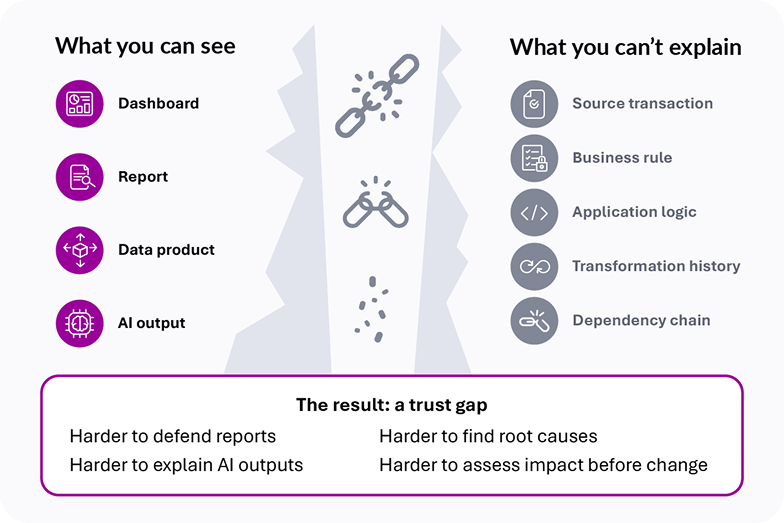
Le iniziative di intelligenza artificiale dipendono da qualcosa di più della semplice disponibilità dei dati. Richiedono dati accurati, interpretabili, aggiornati, gestiti e collegati al contesto aziendale.
Il contesto aziendale ha origine nei sistemi operativi in cui si verificano gli eventi aziendali. Per molte organizzazioni, in particolare nei settori regolamentati, questi sistemi continuano a includere mainframe e piattaforme legacy che rimangono la fonte autorevole dei dati aziendali critici. Quando questi ambienti non sono coperti dalla tracciabilità della provenienza dei dati, le organizzazioni non si limitano a perdere un nodo tecnico in un grafico, ma perdono la verità operativa che si cela dietro i dati.
Ciò ha conseguenze reali.
Un rapporto normativo diventa più difficile da difendere quando i team non riescono a risalire ai sistemi di registrazione che hanno generato i dati. Risolvere un problema di qualità dei dati richiede più tempo quando i team riescono a individuare l'errore a valle ma non la causa a monte. Qualsiasi iniziativa di cambiamento diventa più rischiosa quando i team non comprendono quali report, applicazioni, prodotti dati o pipeline di intelligenza artificiale dipendono dal sistema modificato. Un'iniziativa di intelligenza artificiale diventa più difficile da gestire quando i team non riescono a spiegare la provenienza dei dati utilizzati per basare gli output dei modelli o i suggerimenti degli agenti.
Perché l'IA aumenta la posta in gioco per la genealogia
L'intelligenza artificiale sta cambiando le aspettative delle organizzazioni nei confronti dei dati aziendali. Non è più sufficiente che i dati siano disponibili, catalogati o approvati per l'utilizzo in una dashboard. Man mano che i dati diventano la base per copiloti, modelli, agenti e flussi di lavoro decisionali automatizzati, le organizzazioni devono capire se tali dati sono sufficientemente interpretabili da poter essere considerati affidabili. Ciò richiede più di una semplice visualizzazione del prodotto dati finale. Richiede visibilità sull'intero percorso che i dati hanno compiuto prima di raggiungere un flusso di lavoro di intelligenza artificiale.
I sistemi di intelligenza artificiale ereditano i punti ciechi dei dati che li alimentano. Quando la tracciabilità inizia dopo che i dati sono già stati trasformati, aggregati, replicati o separati dal contesto del sistema di origine, i team non sono in grado di spiegare come quei dati siano stati creati, cosa sia cambiato lungo il percorso o quali presupposti siano in essi incorporati.
Man mano che l'IA si sposta dalla generazione di informazioni all'influenza su decisioni e azioni, tali lacune diventano sempre più significative. Gli utenti aziendali hanno bisogno di avere la certezza che le risposte, i consigli e le azioni ottimali generate dall'IA siano basati su informazioni aggiornate, autorevoli e interpretabili.
È qui che la tracciabilità diventa un elemento fondamentale per la preparazione all'IA. Fornisce la prova che le organizzazioni comprendono i dati alla base dell'intelligenza artificiale e sono in grado di dimostrare la loro origine, come sono cambiati e perché sono affidabili.
Ciò che rende possibile la linea di discendenza completa
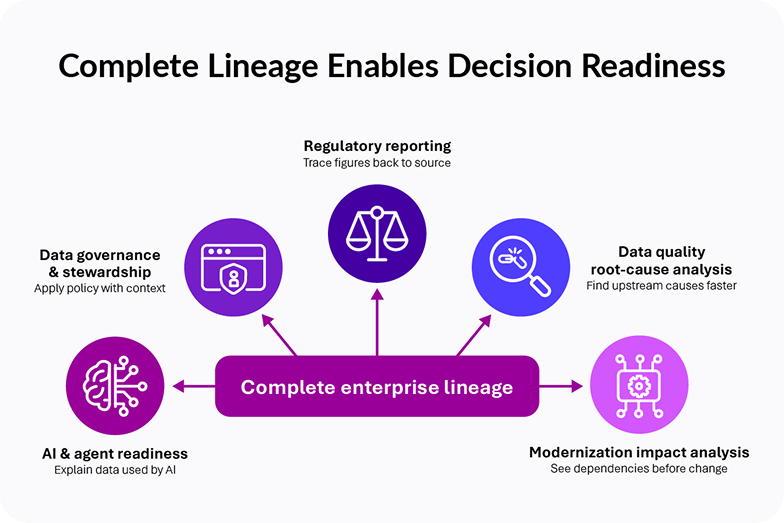
Quando la tracciabilità si estende dai sistemi operativi alle moderne piattaforme dati, le organizzazioni ottengono molto più di un semplice grafico migliore. Ottengono il contesto necessario per prendere decisioni con maggiore sicurezza.
Analisi più rapida delle cause alla radice dei problemi di qualità dei dati: i problemi di qualità dei dati spesso emergono in una fase successiva, ma la causa si è solitamente verificata molto prima nel percorso dei dati. Un difetto in un campo di origine, un processo batch, un processo di trasformazione o definizioni aziendali contrastanti possono tutti generare problemi che si manifestano altrove. Grazie alla tracciabilità completa, i team possono risalire all'origine dei problemi anziché affidarsi a indagini manuali e documentazione frammentaria. Ciò riduce gli sforzi e aumenta la fiducia nella risoluzione dei problemi.
Reportistica normativa più affidabile: la reportistica normativa richiede più che semplici cifre accurate. Le organizzazioni devono essere in grado di dimostrare la provenienza di un dato, come è stato calcolato e come si è mosso all'interno dell'ambiente. Quando la tracciabilità esclude il sistema di registrazione, dimostrare la catena di custodia diventa difficile. Una tracciabilità completa collega i risultati della reportistica ai sistemi operativi e alle trasformazioni che li hanno generati.
Modernizzazione più sicura: prima di modernizzare, sostituire, integrare o dismettere un sistema, i team devono avere visibilità sui report, le applicazioni, i prodotti dati, i processi e le pipeline di intelligenza artificiale che dipendono da esso. I sistemi legacy spesso contengono anni di logica aziendale accumulata e dipendenze scarsamente documentate altrove. Una tracciabilità completa rivela queste relazioni prima che vengano apportate modifiche, aiutando i team a identificare i rischi in anticipo e a prendere decisioni di modernizzazione con maggiore sicurezza.
Maggiore prontezza per l'IA e gli agenti: i sistemi di IA, i copiloti e gli agenti dipendono da dati interpretabili e governati. Quando la tracciabilità risale alle fonti operative, le organizzazioni acquisiscono il contesto necessario per comprendere, governare e fidarsi dei dati alla base degli output e delle decisioni generate dall'IA.
Dove si collocano Rocket e Ataccama
Ataccama ONE offre un'esperienza centralizzata di tracciabilità e governance, in cui i team possono utilizzare, gestire e intervenire sulla tracciabilità a livello aziendale. Gli scanner Rocket funzionano come fonti di tracciabilità supportate all'interno di questo ambiente, pertanto i metadati generati da Rocket vengono visualizzati nello stesso grafico e nella stessa interfaccia della tracciabilità prodotta dagli scanner nativi di Ataccama.
Rocket estende tale visibilità ai sistemi operativi, alle applicazioni, ai database, ai processi, al codice e ai processi di trasformazione che spesso si trovano al di fuori della moderna copertura di tracciabilità. Insieme, Rocket e Ataccama connettono gli ambienti in cui hanno origine i dati aziendali critici con le piattaforme moderne in cui vengono gestiti, analizzati e, sempre più spesso, utilizzati dall'intelligenza artificiale.
Catturare la provenienza dei dati nelle piattaforme moderne è solo una parte della sfida. Il compito più arduo è tracciare i dati attraverso decenni di logica di trasformazione nascosta nel codice procedurale, nella complessa pianificazione e orchestrazione dei processi con diramazioni condizionali e in sistemi di archiviazione non relazionali frammentati e privi di contesto. La profonda esperienza di Rocket in ambienti operativi complessi estende la tracciabilità della provenienza dei dati ai sistemi in cui vengono creati i dati aziendali critici: i sistemi Rocket gestisce e modernizza da anni in collaborazione con le aziende.
Senza visibilità sui sistemi a monte e sui punti di trasformazione, le organizzazioni vedono solo le fasi finali del percorso dei dati. Insieme, Rocket e Ataccama offrono una visione continua dall'origine operativa al consumo governato, aiutando i team a capire non solo dove sono arrivati i dati, ma anche da dove provengono, come sono cambiati e cosa dipende da essi.
È qui che la genealogia diventa più di una semplice documentazione. Diventa un meccanismo di fiducia.
Consideriamo una sfida comune affrontata dagli istituti finanziari: convalidare un dato critico di bilancio e dimostrarne la provenienza.
Cosa succede se un numero di segnalazione regolamentare non può essere ricondotto alla sua fonte?
Prima: lignaggio frammentato
Un'organizzazione di servizi finanziari sta preparando una relazione trimestrale per la regolamentazione. Il dato riportato è visibile nell'ambiente di analisi, ma la tracciabilità si interrompe prima di raggiungere i sistemi da cui hanno avuto origine i dati relativi a conti, transazioni e saldi.
Quando un revisore mette in discussione un dato, ingegneri dei dati, team di sviluppo applicazioni, analisti e responsabili della governance esaminano ciascuno la propria parte del processo. Senza una visione completa, dalla fonte al report, dimostrare come è stato ricavato il dato diventa un lungo e complesso esercizio manuale.
Il risultato: convalida ritardata, maggiore impegno per le verifiche e minore fiducia nella capacità dell'organizzazione di difendere il dato dichiarato.
Dopo: Rocket Data Intelligence e Ataccama
Grazie a Rocket Data Intelligence, che estende la tracciabilità ai sistemi operativi, e ad Ataccama, che offre un'esperienza centralizzata di tracciabilità e governance, i team possono risalire al dato presente nel report, fino ai sistemi di origine, alle trasformazioni e alle dipendenze.
Quando un dato viene contestato, l'organizzazione può individuare rapidamente la sua origine, le modifiche apportate e i sistemi che hanno contribuito al risultato finale.
Il risultato: convalida più rapida, maggiore affidabilità degli audit, riduzione del lavoro manuale e una base più solida per la rendicontazione, la governance e le iniziative di intelligenza artificiale.
Nel prossimo articolo esamineremo come la provenienza affidabile, i metadati e il contesto aziendale contribuiscono alla predisposizione all'IA e aiutano le organizzazioni a rafforzare la fiducia nei dati che alimentano analisi, automazione, assistenti virtuali e agenti.
Nel frattempo, scopri come Rocket Data Intelligence e Ataccama collaborano per offrire una visibilità completa su ambienti dati operativi e moderni.
Informazioni su questa serie
La serie è iniziata esplorando il motivo per cui una tracciabilità incompleta crea punti ciechi. Ataccama ha mostrato come estendere la visibilità agli ambienti mainframe, distribuiti e cloud crei la tracciabilità completa necessaria a supportare iniziative di governance, analisi, modernizzazione e intelligenza artificiale.
Nel prossimo articolo, Ataccama esplora il passaggio dai dati interpretabili all'utilizzo governato dei dati. La tracciabilità completa tra i diversi ambienti aiuta le organizzazioni a comprendere l'origine dei dati, le trasformazioni, le dipendenze e l'impatto delle modifiche a valle. La governance risponde quindi alla domanda cruciale: questi dati devono essere utilizzati per questa decisione? Man mano che l'IA assume un'influenza sempre maggiore sui risultati aziendali, le organizzazioni necessitano di entrambe le risposte. È qui che la governance basata su policy diventa essenziale.
Domande frequenti
1. Sala stampa di Gartner, La mancanza di dati pronti per l'IA mette a rischio i progetti di intelligenza artificiale, febbraio 2026Gartner è un marchio commerciale di Gartner, Inc. e/o delle sue affiliate.
2. Riepilogo: Sondaggio sugli utenti di mainframe Arcati del 2026 - Planet Mainframe
Post correlati
Colmare il divario nella tracciabilità: come Ataccama e Rocket Software offrono una tracciabilità end-to-end completa.
Una tracciabilità incompleta non è affidabile. Scopri cosa serve per colmare le lacune e tracciare i dati in modo davvero completo.

